
mitsubishi dashboard symbols and meanings pdf
Mitsubishi Dashboard Symbols and Meanings: A Comprehensive Guide
Navigating your Mitsubishi’s dashboard requires understanding its symbols; downloadable PDF guides from Mitsubishi Electric detail recycling information and safety warnings regarding product usage.
Various online forums, like MOTOR-TALK, discuss Mitsubishi models (ASX, Eclipse Cross, Outlander) and user experiences, offering insights into specific symbol interpretations.
Mitsubishi manuals utilize symbols to indicate potential hazards from incorrect operation, categorized by danger level, ensuring safe and informed vehicle operation for all drivers.
Mitsubishi vehicles employ a sophisticated system of dashboard symbols to communicate vital information to the driver, ranging from routine maintenance reminders to critical warnings about vehicle operation. Understanding these symbols is paramount for safe and efficient driving, allowing for prompt responses to potential issues before they escalate into more serious problems.
Accessing a Mitsubishi dashboard symbols PDF guide is a crucial first step in familiarizing yourself with these indicators. These guides, often available directly from Mitsubishi Electric or through online owner resources, provide detailed explanations of each symbol’s meaning, categorized by severity and system affected. They also detail recycling information for Mitsubishi Electric products.
Online communities and forums, such as those found on MOTOR-TALK, offer valuable supplementary information and real-world experiences from Mitsubishi owners. Discussions surrounding models like the ASX, Eclipse Cross, and Outlander frequently address specific symbol interpretations and troubleshooting tips, enhancing your understanding beyond the official documentation. Recognizing these symbols ensures responsible vehicle operation.
Understanding the Importance of Dashboard Warnings
Dashboard warning lights aren’t merely indicators; they are critical communication tools designed to alert drivers to potential mechanical or electrical issues. Ignoring these warnings can lead to significant vehicle damage, costly repairs, and, most importantly, compromise safety for both the driver and passengers.
Mitsubishi dashboard symbols, detailed in available PDF manuals, are categorized by severity. Red symbols typically signify immediate attention is required, potentially indicating a critical system failure. Yellow or amber lights suggest a problem that needs addressing soon, while green or blue lights generally provide informational updates.
Referencing the official Mitsubishi Electric documentation, alongside insights from owner forums like MOTOR-TALK, is vital for accurate interpretation. Understanding the specific meaning of each symbol – whether related to engine health, braking systems, or fluid levels – empowers drivers to react appropriately. Proactive attention to these warnings, guided by the PDF, prevents minor issues from becoming major hazards.

Core Warning Lights
Essential Mitsubishi PDFs detail critical warning lights—engine, oil pressure, battery, coolant temperature, and brake systems—demanding immediate attention for safe vehicle operation.
Engine Warning Light (Check Engine Light)
The Engine Warning Light, often called the Check Engine Light (CEL), is a crucial indicator detailed in Mitsubishi’s downloadable PDF manuals. Its illumination signals a potential issue within the engine or its related systems. This could range from a loose gas cap – a minor inconvenience – to a serious malfunction like a catalytic converter failure or misfiring cylinders.
Mitsubishi owners’ manuals emphasize that ignoring a lit CEL can lead to more significant and costly repairs. The PDF guides recommend promptly checking the light and, if the problem persists, utilizing an OBD-II scanner to retrieve diagnostic trouble codes (DTCs). These codes provide specific information about the detected issue, aiding in accurate diagnosis.
Online Mitsubishi forums frequently discuss CEL scenarios, offering user experiences and potential solutions. However, the manuals strongly advise professional diagnosis and repair for complex engine issues, ensuring vehicle safety and longevity. Ignoring this warning light can compromise engine performance and potentially cause further damage.
Oil Pressure Warning Light
The Oil Pressure Warning Light, prominently featured in Mitsubishi’s vehicle PDF documentation, signifies a critical issue: insufficient oil pressure within the engine. This is a severe warning, demanding immediate attention, as low oil pressure can cause catastrophic engine damage. The manuals detail that continued driving with this light illuminated risks engine seizure and costly repairs.
Mitsubishi recommends immediately stopping the vehicle in a safe location if the oil pressure light activates. Checking the oil level is the first step, but even with sufficient oil, the light could indicate a failing oil pump or internal engine problems. The PDF guides stress the importance of avoiding further operation.
Online forums dedicated to Mitsubishi vehicles often feature discussions about this warning light, with users sharing experiences. However, the official Mitsubishi documentation consistently advises professional inspection and repair. Ignoring this warning can lead to irreversible engine damage, highlighting the importance of prompt action and qualified assistance.
Battery Warning Light
The Battery Warning Light, clearly illustrated in Mitsubishi’s official vehicle PDF manuals, indicates a problem with the charging system. This doesn’t necessarily mean the battery is dead, but rather that it isn’t being adequately recharged by the alternator. Ignoring this warning can lead to a complete battery discharge and vehicle breakdown.
Mitsubishi documentation emphasizes that the light can signal issues beyond the battery itself, including a faulty alternator, loose or corroded battery cables, or a problem within the vehicle’s electrical system. The PDF guides advise checking the battery connections as a first step, but professional diagnosis is often required.
Discussions on Mitsubishi-specific online forums frequently address this light, with users reporting experiences ranging from simple cable issues to alternator failures. However, the official Mitsubishi resources consistently recommend a qualified mechanic’s inspection to accurately pinpoint the cause and prevent further damage to the vehicle’s electrical components.
Coolant Temperature Warning Light
The Coolant Temperature Warning Light, detailed within Mitsubishi’s comprehensive vehicle PDF manuals, signals that the engine is overheating. This is a critical warning, as continued operation with an overheated engine can cause severe and costly damage, including a blown head gasket or warped cylinder head.
Mitsubishi documentation stresses the importance of immediately addressing this warning. The PDF guides recommend safely pulling over and allowing the engine to cool down before checking the coolant level. Low coolant, a faulty thermostat, or a malfunctioning radiator fan can all trigger this light.
Online Mitsubishi forums often feature discussions about this light, with users sharing experiences related to coolant leaks and radiator issues. However, the official Mitsubishi resources consistently advise against attempting repairs without proper knowledge and recommend seeking professional assistance to diagnose and resolve the overheating problem effectively.
Brake System Warning Light
The Brake System Warning Light, thoroughly explained in Mitsubishi’s official vehicle PDF manuals, indicates a potential issue within the braking system. This could range from a low brake fluid level to a more serious problem with the ABS or emergency brake assist systems.
Mitsubishi emphasizes that this light should never be ignored. The PDF guides detail the importance of immediately inspecting the brake fluid reservoir and having the system professionally checked. Ignoring this warning can compromise braking performance and create a dangerous driving situation.
Discussions on Mitsubishi-specific online forums frequently address this light, with users reporting issues like worn brake pads or failing brake sensors. However, the official documentation consistently advises against self-diagnosis and repair, recommending a qualified technician to accurately identify and rectify the underlying cause of the warning.

Essential Information Lights
PDF guides detail lights for ABS, airbags, traction control, and vehicle stability; understanding these indicators ensures informed responses to system status and vehicle safety.

ABS Warning Light
The Anti-lock Braking System (ABS) warning light, detailed in Mitsubishi’s downloadable PDF owner’s manuals, illuminates when a malfunction is detected within the ABS. This crucial system prevents wheel locking during braking, enhancing steering control, particularly on slippery surfaces. When this light appears, it doesn’t necessarily mean you can’t brake, but the ABS assistance is unavailable.
Referencing the PDF, a steady ABS light indicates a system failure requiring immediate attention from a qualified mechanic. Intermittent flashing, however, might suggest a temporary issue. Online Mitsubishi forums, such as MOTOR-TALK, often feature discussions regarding ABS light troubleshooting, with users sharing experiences related to sensor issues or low brake fluid levels.
Ignoring the ABS warning light can compromise braking performance and safety. The PDF emphasizes the importance of professional diagnosis and repair to restore full ABS functionality, ensuring optimal vehicle control in emergency braking situations. Always consult the manual for specific model guidance.
Airbag Warning Light
The airbag warning light, comprehensively explained within Mitsubishi’s official PDF owner’s manuals, signals a potential issue with the Supplemental Restraint System (SRS), encompassing airbags and seatbelt pretensioners. A continuously illuminated light indicates a system malfunction, meaning airbags may not deploy during a collision. This is a critical safety concern demanding immediate attention.
Mitsubishi documentation stresses that a flashing airbag light often points to a more intermittent problem, but still requires professional diagnosis. Online forums dedicated to Mitsubishi vehicles, like those found on MOTOR-TALK, frequently discuss airbag light issues, often linked to faulty sensors or wiring.
The PDF strongly advises against ignoring this warning. A compromised airbag system significantly reduces occupant protection in an accident. Promptly seeking a qualified technician for inspection and repair is essential to ensure the SRS functions correctly, safeguarding passengers during unforeseen events.
Traction Control System (TCS) Light
The Traction Control System (TCS) light, detailed in Mitsubishi’s downloadable PDF owner’s manuals, illuminates to indicate the system is actively working to prevent wheelspin. A flashing TCS light signifies the system is engaging, reducing engine power or applying brakes to regain traction, particularly on slippery surfaces like snow or ice.
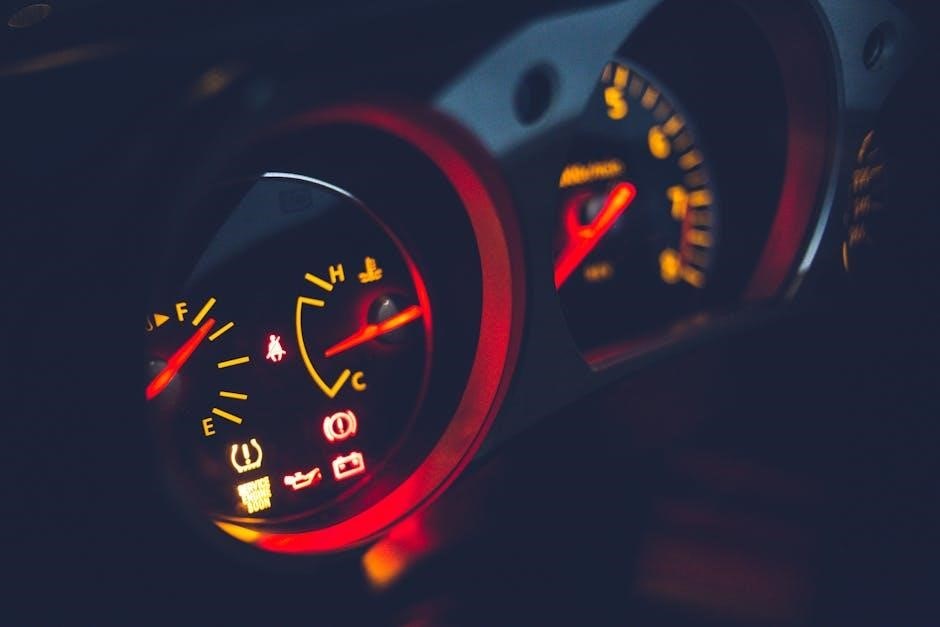
However, a consistently lit TCS light suggests a malfunction within the system. Mitsubishi’s documentation explains this could stem from wheel speed sensor issues or problems with the TCS module itself. Online Mitsubishi communities, such as those on MOTOR-TALK, often feature discussions regarding TCS light diagnoses.
The PDF emphasizes that while the vehicle may remain drivable with a solid TCS light, optimal control and stability are compromised. It’s crucial to have the system inspected by a qualified technician to restore full functionality and ensure safe driving conditions, especially during inclement weather.

Vehicle Stability Control (VSC) Light
The Vehicle Stability Control (VSC) light, comprehensively explained within Mitsubishi’s official PDF owner’s manuals, signals the operation of the VSC system. A flashing VSC light indicates the system is actively intervening to help maintain vehicle control during skidding or loss of traction, adjusting braking and engine output.
Conversely, a solid VSC light often points to a system malfunction. Mitsubishi’s documentation details potential causes, including issues with wheel speed sensors, the VSC module, or related components. Online forums dedicated to Mitsubishi vehicles, like those found on MOTOR-TALK, frequently host threads discussing VSC light troubleshooting.
The PDF stresses that a continuously illuminated VSC light necessitates professional diagnosis. While the vehicle might still be operable, the absence of VSC compromises stability, particularly in challenging driving conditions. Prompt inspection and repair are vital for ensuring optimal safety and vehicle performance.
Tire Pressure Monitoring System (TPMS) Light
The Tire Pressure Monitoring System (TPMS) light, detailed in Mitsubishi’s downloadable PDF owner’s manuals, alerts drivers to potentially low tire pressure. A solid TPMS light signifies that one or more tires are significantly underinflated, impacting fuel efficiency and handling. Referencing the vehicle’s tire placard (usually located on the driver’s side doorjamb) for recommended pressures is crucial.
A flashing TPMS light indicates a system malfunction, potentially stemming from faulty sensors or a communication issue. Mitsubishi’s PDF guides outline diagnostic steps, but professional service is often required. Online Mitsubishi communities, such as those on MOTOR-TALK, provide user experiences and troubleshooting tips.
Ignoring the TPMS light can lead to uneven tire wear, reduced braking performance, and an increased risk of tire failure. Regularly checking tire pressure, even without the light illuminating, is a proactive safety measure emphasized in the official documentation.

Specific Mitsubishi System Indicators
Mitsubishi PDFs detail unique system indicators, like those for Outlander PHEV, 4WD, Eco Mode, and CVT transmissions, aiding drivers in understanding vehicle functions.
Mitsubishi Outlander PHEV Specific Symbols
The Mitsubishi Outlander PHEV boasts a unique set of dashboard symbols, comprehensively detailed within the official Mitsubishi Electric product PDFs and owner’s manuals. These symbols relate specifically to the plug-in hybrid electric vehicle’s operation, going beyond standard warning and information lights.

Owners will find indicators for the electric motor system status, battery charge level, and the operation of the regenerative braking system. The PDFs clearly illustrate symbols related to the vehicle’s drive modes – Auto, Save, and Electric – explaining when each mode is active and its impact on fuel efficiency and battery usage.

Furthermore, the documentation outlines symbols pertaining to the PHEV’s charging process, indicating charging status, errors, and completion. Online forums, such as those on MOTOR-TALK, often discuss real-world experiences with these symbols, providing additional context and troubleshooting tips for Outlander PHEV drivers. Understanding these PHEV-specific indicators is crucial for maximizing the vehicle’s efficiency and ensuring optimal performance.
4WD System Indicator
Mitsubishi vehicles equipped with a four-wheel-drive (4WD) system utilize specific dashboard symbols to communicate its operational status, thoroughly explained in the Mitsubishi Electric product PDFs and owner’s manuals. These indicators are vital for drivers navigating challenging terrains or inclement weather conditions.
The primary 4WD indicator illuminates to confirm the system is engaged, often accompanied by sub-indicators displaying the selected 4WD mode – such as 2H, 4H, or 4L. The PDF documentation details the function of each mode and the appropriate driving scenarios for their use. A flashing 4WD symbol typically signals a system malfunction, requiring immediate attention.
Online Mitsubishi communities, like those found on MOTOR-TALK, frequently discuss 4WD system behavior and troubleshooting. These forums provide valuable insights from other owners regarding interpreting the symbols and addressing potential issues. Correctly understanding the 4WD system indicator ensures optimal traction and control, enhancing driving safety and vehicle performance.
Hill Start Assist Indicator
Mitsubishi vehicles featuring Hill Start Assist (HSA) employ a dedicated dashboard symbol to indicate the system’s active status, comprehensively detailed within the vehicle’s owner’s manual PDF. HSA is a crucial safety feature designed to prevent rollback when starting on inclines, enhancing driver confidence and control.
The HSA indicator, typically depicted as a car on a slope, illuminates when the system is engaged. This occurs when the vehicle is stopped on an incline, automatically holding the brakes for a brief period after the driver releases the pedal. The PDF explains the system’s operational parameters and limitations.
Mitsubishi forums, such as those on MOTOR-TALK, often feature discussions regarding HSA functionality and user experiences. These platforms provide practical insights into the system’s behavior in various driving conditions. Understanding the HSA indicator and its function is essential for safe and smooth hill starts, particularly for drivers unfamiliar with the technology.
Eco Mode Indicator
Mitsubishi vehicles equipped with Eco Mode utilize a specific dashboard symbol – often a green leaf or a stylized ‘ECO’ – to signal its activation, thoroughly explained within the official Mitsubishi owner’s manual PDF. Eco Mode prioritizes fuel efficiency by adjusting engine and transmission parameters.
When activated, Eco Mode typically modifies throttle response, reducing acceleration sensitivity, and optimizes shift points in automatic transmissions. This results in a more conservative driving experience, maximizing mileage and minimizing emissions. The PDF details the specific changes implemented by Eco Mode in your vehicle.
Online Mitsubishi communities and forums frequently discuss the real-world impact of Eco Mode on fuel economy. Users share their experiences and observations, providing valuable insights into its effectiveness. Understanding the Eco Mode indicator allows drivers to consciously choose a more fuel-efficient driving style, contributing to both cost savings and environmental responsibility.
CVT (Continuously Variable Transmission) Indicator
Mitsubishi vehicles featuring a Continuously Variable Transmission (CVT) employ a dedicated dashboard indicator, comprehensively detailed within the vehicle’s official owner’s manual PDF. This symbol, often resembling a gear with a variable curve, signals the CVT’s operational status and potential issues.
The CVT indicator illuminates during normal operation, confirming the transmission is functioning as intended. However, a flashing or solid indicator accompanied by other warning lights may signify a problem requiring immediate attention. The PDF provides specific troubleshooting steps and recommended actions.
Online Mitsubishi forums, such as those on MOTOR-TALK, frequently discuss CVT performance and potential concerns, particularly with models like the Eclipse Cross. Users share experiences and insights regarding the CVT indicator, offering practical advice. Understanding this indicator is crucial for maintaining optimal transmission health and preventing costly repairs.

Additional Symbols & Considerations
PDF manuals detail lighting and fluid symbols, alongside recycling information; forums discuss model-specific issues, emphasizing the importance of referencing the official Mitsubishi documentation.
Symbols Related to Lighting Systems
Mitsubishi dashboard symbols pertaining to lighting systems are crucial for safe operation, and detailed explanations reside within the official vehicle PDF manuals. A headlight symbol, often depicting a lightbulb or headlight beam, indicates issues with the headlights – potentially a bulb failure or system malfunction. Similarly, a symbol resembling a taillight alerts drivers to problems with the rear lighting.
Fog light indicators, usually a stylized depiction of a fog light, illuminate when the fog lights are activated and can also signal a fault. The turn signal indicator, a flashing arrow, is a common sight, but a continuously lit arrow suggests a bulb is out. PDF guides clarify distinctions between daytime running lights and standard headlights.
Furthermore, symbols related to high beams and automatic headlight functions are explained in the owner’s manual. Online forums, while helpful, should be cross-referenced with the official Mitsubishi documentation for accurate interpretation of these lighting-related dashboard warnings.
Symbols Related to Washer Fluid & Other Fluids
Dashboard symbols indicating low fluid levels are vital for maintaining your Mitsubishi’s functionality, and comprehensive details are available in the official vehicle PDF manuals. A common symbol resembles a windshield with water spraying, alerting drivers to low washer fluid. Ignoring this can impair visibility. Beyond washer fluid, symbols for coolant levels – often a thermometer-like icon – warn of potential overheating.
Power steering fluid, if applicable, may have its own dedicated symbol, typically a steering wheel icon. Low brake fluid triggers a specific warning light, crucial for safe stopping. The PDF guides detail the location of fluid reservoirs and proper filling procedures.
It’s important to note that some Mitsubishi models may combine fluid level warnings. Online forums can offer practical advice, but always prioritize the information provided in the official Mitsubishi documentation for accurate diagnosis and fluid replenishment procedures.
Decoding Symbols in the Mitsubishi Owner’s Manual (PDF)
The Mitsubishi owner’s manual, available in PDF format, is the definitive resource for understanding dashboard symbols. These manuals categorize symbols based on severity – warnings, indicators, and informational lights. Warning lights, often red or amber, demand immediate attention, while indicators (yellow or blue) suggest a system is engaged or requires checking.
PDF versions allow for easy searching using keywords like “warning lights” or specific system names (e.g., “ABS,” “Traction Control”). Mitsubishi employs standardized symbols, but slight variations may exist between models and years. The manual explains the meaning of each symbol, potential causes, and recommended actions.
Furthermore, the PDF often includes diagrams illustrating symbol locations on the dashboard. Referencing the manual ensures accurate interpretation and avoids misdiagnosis, promoting safe vehicle operation and timely maintenance. Online forums can supplement, but the manual remains paramount.
Resources for Mitsubishi Dashboard Symbol Information
Beyond the official Mitsubishi owner’s manual PDF, several online resources aid in decoding dashboard symbols. Automotive forums, such as MOTOR-TALK’s Mitsubishi section, host discussions where owners share experiences and interpretations of various lights. These communities can offer practical insights, especially for specific models like the ASX, Eclipse Cross, and Outlander.
Mitsubishi Electric’s website provides product manuals, including those detailing safety symbols related to recycling and proper usage. While not solely focused on dashboard warnings, they demonstrate the company’s commitment to clear communication through standardized iconography.
Additionally, numerous automotive websites and YouTube channels offer guides to common dashboard symbols. However, always cross-reference information with your vehicle’s official manual to ensure accuracy. Remember that forum discussions represent individual experiences and may not always be definitive.